

PS3 Takes Folding@Home Into the Record Books
SCEI just sent out word that thanks to the PlayStation 3, Stanford University’s Folding@Home initiative has prospered into the Guinness Book of World Records to
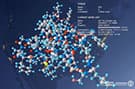
SCEI just sent out word that thanks to the PlayStation 3, Stanford University’s Folding@Home initiative has prospered into the Guinness Book of World Records to be recognized as the World’s Most Powerful Distributed Network.
The program has been running for quite some time through user participation via their own PCs, but only recently has Sony and their PS3s CELL processor been put to use. How successful is it? I could tell you the official science term for it (petaflop), but that probably sounds like a made up word unless your nighttime habits consist of silicon dreams. To put it simply, over 670,000 unique PS3 users have contributed their console to the cause of researching certain forms of cancer and other diseases, which has processed enough data to warrant an entry into the Guinness Book of World Records.
It’s great to see the gaming community contributing to the betterment of mankind, and it’s a good change to finally see something worth commending Sony on for their efforts. Press Release included after the break…
Press Release
PLAYSTATION(R)3 Enables Folding@home(TM) to be Recognized by Guinness World Records(TM) as World’s Most Powerful Distributed Computing Network
TOKYO, Oct. 31 /PRNewswire/ — Sony Computer Entertainment Inc. (SCEI) today announced that PLAYSTATION(R)3 (PS3(R)) computer entertainment systems, part of Stanford University’s Folding@home(TM) program, have enabled the distributed computing project to be recognized by Guinness World Records(TM) as the most powerful distributed computing network in the world. The record was initially set on September 16, 2007 as Folding@home surpassed one petaflop(*1), a computing milestone that has never been reached before by a distributed computing network. In addition to this, the collective efforts of our users have enabled PS3 alone to reach the petaflop mark on September 23, 2007.
The record is a testament to the widespread participation of PS3 users from around the world-currently more than 670,000 unique PS3 users have registered to the Folding@home network, bringing the overall computing power of the program to more than a petaflop. Thanks to PS3’s powerful Cell Broadband Engine(TM) (Cell/B.E.), scientists will now be able to make greater progress in their studies of protein folding and its link to diseases such as Alzheimer’s, Parkinson’s and certain forms of cancer.
“To have Folding@home recognized by Guinness World Records as the most powerful distributed computing network ever is a reflection of the extraordinary worldwide participation by gamers and consumers around the world and for that we are very grateful,” said Vijay Pande, Associate Professor of Chemistry at Stanford University and Folding@home project lead. “Without them we would not be able to make the advancements we have made in our studies of several different diseases. But it is clear that none of this would be even remotely possible without the power of PS3, it has increased our research capabilities by leaps and bounds.”
“To have PS3 play such a large role in allowing Folding@home to be honored by Guinness World Records is truly incredible,” said Masayuki Chatani, Executive Vice President & Chief Technology Officer, Technology Platform, Sony
Computer Entertainment Inc. “This record is clear evidence of the power of PS3 and the contributions that it is making to the Folding@home network, and more importantly, scientific research.”
The Folding@home program up until recently leveraged only the distributed computing power of personal computers (PC) from around the world. The PCs that made up the Folding@home network numbered roughly 200,000 giving the program the equivalent of about one-quarter of a petaflop. On March 15, 2007, PS3 joined the program and since then more than 670,000 unique PS3 users have registered to the Folding@home network, bringing the overall computing power of the program to more than a petaflop.
Starting with Folding@home, SCE will continue to support distributed computing projects in a wide variety of academic fields such as medical and social sciences and environmental studies through the use of PS3 and hopes to contribute to the advancement of science.